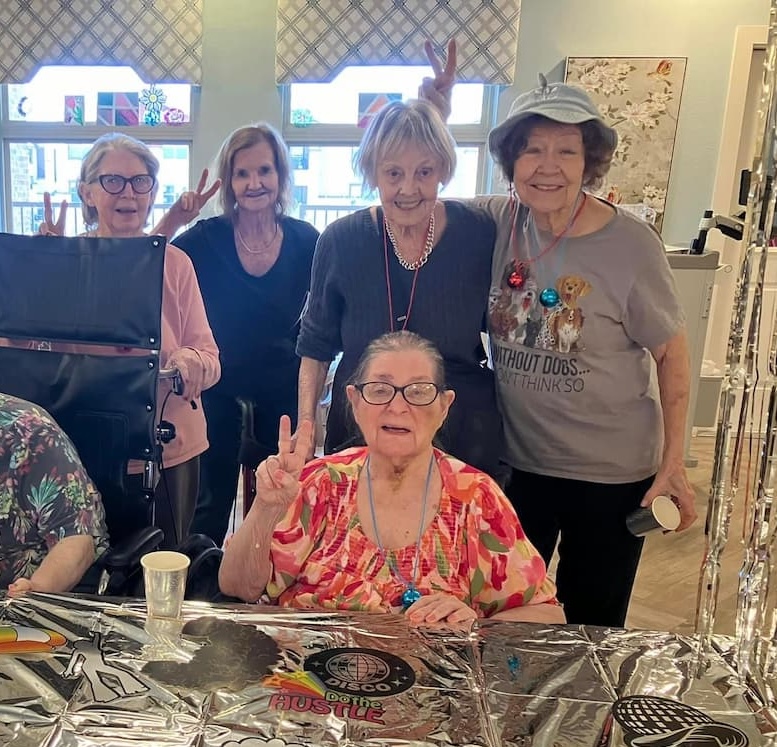
If your loved one has resisted the idea of assisted living, they are in good company.
About 62% of seniors initially say they would prefer to stay home rather than consider a move. And nearly 85% of families delay their search because their loved one is not ready, or because the word “assisted living” still conjures images that no longer reflect what these communities actually look like.
That hesitation is understandable, and it does not mean the move is wrong. How seniors adjust to assisted living is personal.
Families who make it through the transition consistently report improvements in their loved one’s social life, physical health, emotional well-being, and nutrition. The difficulty is not usually the destination. It is the getting there.
How long does it take to adjust to assisted living? The honest answer is that it varies, but there is a well-documented arc that most residents and families move through, and knowing what to expect makes a meaningful difference.

The First Week: Everything Is New
The first week is typically the hardest. A new living space, new faces, new routines, and unfamiliar sounds at night can leave a new resident feeling disoriented and withdrawn. This is not a sign that the move was a mistake.
What helps most in week one:
- Familiar objects from home, photos, a favorite blanket, a meaningful piece of furniture
- Consistent family contact without hovering, or a daily call or short visit, goes a long way
- Gentle encouragement to attend one activity, even briefly
- Giving the team context about the resident’s preferences, routines, and personality
The goal in week one is not comfort. It is familiarity. Every repeated interaction with a team member, neighbor, or routine is a small deposit toward feeling at home.
Weeks 2 Through 10: The Hardest Stretch
There is a recognized nursing diagnosis called Relocation Stress Syndrome (RSS), and it exists because what new residents experience is real, documented, and worth naming. It shows up as anxiety, loneliness, sleep changes, social withdrawal, and occasional confusion.
Symptoms typically peak somewhere between weeks two and 10 after a move.
One of the strongest predictors of how intense this period feels is whether the senior had a voice in the decision to move.
Residents who felt included in the process from the beginning experience significantly less distress than those who felt the decision happened to them rather than with them. If there is still time to involve your loved one in touring, choosing, and planning, that investment pays off in the adjustment period.
Knowing that this stretch has a name, a timeline, and a clear endpoint helps families resist the urge to second-guess a good decision during the hardest weeks.
The 90-Day Mark: A Real Turning Point
Most families describe the 90-day point as the moment things begin to feel different. Routines have taken hold. Team members know the resident by name and preference. A few neighbors have become familiar, maybe even friendly. The dining room no longer feels like a room full of strangers.
This is also when families often notice something they did not expect.
Nearly half of family members report that their relationship with their loved one improved after the move to assisted living, and they are about 24% more likely to describe their relationship as good than before the transition. When the caregiving burden shifts to a professional team, families are free to be family again.
Signs the adjustment is going well at 90 days:
- The resident mentions a team member or neighbor by name
- Mealtimes have become something they attend without prompting
- Sleep and appetite have stabilized
- Complaints about the move have reduced in frequency or intensity
What the Long-Term View Looks Like
The transition to assisted living is hard. Life on the other side of it is often better than families expected.
Research tracking assisted living residents over several years found that hospital admissions dropped measurably between year one and year three, reflecting residents whose health had genuinely stabilized in a supported environment.
Nearly 75% of assisted living residents report that the move improved their quality of life, and 70% say their overall health outlook improved as well.
These are not outliers. They are what a well-matched community and a settled routine tend to produce over time.
Tips for Easing the Transition at Any Stage
Families play a real role in how smoothly the adjustment goes. A few approaches that consistently help:
- Visit during activities rather than just stopping by the room
- Bring familiar foods, books, or objects from home on early visits
- Resist the urge to ask “do you like it here?” in the first few weeks
- Talk to the community team regularly and share what you are noticing
How Buda Oaks Supports New Residents
Buda, TX, has a community feel that carries over into life at Buda Oaks.
The mild Hill Country climate, slower pace, and genuine neighborliness of the area make it a natural place to settle in. Residents benefit from:
- Personalized care plans developed with the resident and family
- Chef-prepared meals
- Daily programming across fitness, creative arts, and social activities
- On-site therapy services to support physical and cognitive health
- A dedicated memory care neighborhood for residents with Alzheimer’s or other forms of dementia
Our team gets to know new residents before and after move-in. The goal is never to rush the adjustment, but to ensure each resident has what they need to get there on their own timeline.